
Stop Guessing Your Rank: A Better Way to Track North Carolina Search Results
Imagine this: You’re sitting in your office in North Hills, Raleigh. You open your laptop, type “plumber near me” into Google, and there you are – Number One in the Local Map Pack. You feel a surge of pride. Your SEO is working, right? But then, you drive home to Cary or Apex. You perform the same search, and suddenly, your business is nowhere to be found. You’ve vanished from the first page, replaced by competitors you’ve never even heard of.
This is the daily frustration of North Carolina small business owners. Whether you are a contractor in Charlotte, a lawyer in Greensboro, or a dentist in Wilmington, the “Old Way” of tracking rankings is failing you. Traditional rank tracking is “flat.” It gives you a single number for a single location, usually based on a zip code or a static IP address. But Google doesn’t work that way anymore.
In 2026, Google’s local ranking algorithm is hyper-sensitive to three core pillars: Relevance, Distance, and Popularity. Of these, Distance (or proximity) has become the most aggressive gatekeeper of your leads. If you aren’t using a modern google maps rank tracker that utilizes GeoGrid technology, you are essentially flying blind. You aren’t just competing against the city of Raleigh; you are competing block-by-block, neighborhood-by-neighborhood. It is time to stop guessing and start using data-driven local seo tools to dominate your territory.
Why “Average” Rank is a Lie in North Carolina
If an SEO agency tells you that you “Rank #3 on average in Raleigh,” they are lying to you. There is no such thing as an “average” rank in a modern local search ecosystem. Proximity is the #1 ranking factor, and it creates what we call the “Proximity Trap.”
Google’s goal is to provide the most convenient solution to the user. If a user is standing in the parking lot of the Village District, Google is going to prioritize businesses within a two-mile radius. As that user moves toward Glenwood South, the results shift instantly. Because of this, why standard Raleigh SEO tactics often fail to move the needle for storefronts is often due to a lack of understanding of this spatial volatility.
When you use standard tracking, you might see a “3” next to your keyword. But that “3” is only true for the specific square foot where the server is located. Five blocks away, you might be at position “15.” By relying on these flat metrics, you miss the “dead zones” in your service area – places where your competitors are eating your lunch because you didn’t know you were invisible there. To truly understand your reach, you need to uncover the hidden proximity signals that determine your shop’s reach across North Carolina. This is where [local seo tools](https://seovipertools.com) become indispensable, revealing the granular truth about your visibility.
The Power of GeoGrid Tracking: Seeing the Invisible
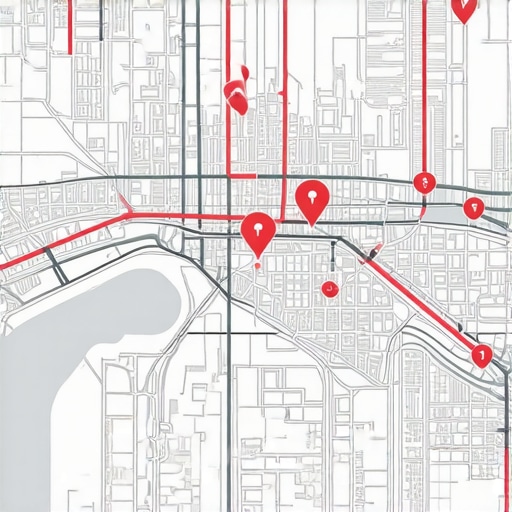
So, what is the solution? It’s called GeoGrid technology. Instead of a single ranking number, a GeoGrid provides a visual map – a 13×13 or 7×7 grid of nodes placed over a specific geographic area. Each node represents a specific GPS coordinate where a search was simulated.
When you look at a GeoGrid, you see a sea of green, yellow, and red circles. Green means you’re in the top 3 (The Map Pack). Yellow means you’re on the cusp. Red means you’re invisible. This visual representation allows you to see exactly where your “visibility wall” is. For a google maps ranking service, this is the gold standard because it allows for “local search optimization” that is actually measurable and actionable.
Let’s look at a practical industry example. Consider a Raleigh plumber. They might have a strong presence in North Hills, showing solid green nodes across that neighborhood. However, as the grid moves toward Cary, the nodes turn red. This tells the plumber that their google business profile seo is working locally, but their authority isn’t “bleeding” into the neighboring town. Without this grid, they might just think “I need more reviews.” With the grid, they know “I need to build local citations and location-specific content for Cary.” This is the power of a google maps rank tracker; it turns a vague problem into a surgical strategy.
4 Hidden Signals for Winning the NC Map Pack in 2026
Dominating the North Carolina market in 2026 requires more than just a verified profile. You need to feed the algorithm specific signals that prove you are the most relevant and prominent choice for a specific neighborhood. Here are the four signals we focus on at Raleigh Local SEO:
Signal 1: Hyperlocal Content
Google’s AI-driven search is getting better at understanding local context. If your website only mentions “Raleigh,” you’re missing out. You need to talk about Brier Creek, Five Points, and Oakwood. Understanding how hyperlocal content marketing helps North Carolina shops win the block-by-block search war is the difference between a city-wide presence and a neighborhood-wide dominance. This includes mentioning local landmarks, community events, and specific street intersections in your updates.
Signal 2: Review Velocity & Keywords
It’s not just about having a 5-star rating anymore. Google looks at “Review Velocity” – how consistently you are getting new reviews. Furthermore, the keywords within those reviews are massive ranking signals. When a customer writes, “Best emergency plumber in Raleigh near Crabtree Mall,” they are doing your SEO for you. This sentiment and keyword density help Raleigh contractors win more jobs against larger, national franchises.
Signal 3: Profile Completeness & Optimization
Most businesses fill out 60% of their profile and stop. In 2026, you need 100%. This includes adding products, services, a robust “from the business” description, and frequent “Google Updates” (formerly posts). Utilizing a comprehensive google business profile optimization strategy ensures that every feature Google offers is working in your favor. If you aren’t using the Q&A section or the booking features, you are leaving ranking points on the table.
Signal 4: Behavioral Signals
Google tracks how users interact with your listing. Do they click “Request a Quote”? Do they click “Driving Directions”? Do they spend time looking at your photos? These behavioral signals tell Google that your business is a “popular” destination. High-quality, original local images – not stock photos – are essential here. A photo of your truck parked in front of the North Carolina State Capitol is worth a thousand stock photos of a generic “happy worker.”
Auditing Your Profile Like a Pro
Before you spend a dime on ads, you must perform a google business profile audit tool check. A messy profile with inconsistent data is like trying to fill a bucket with holes in it. You can pour as much “SEO juice” as you want into it, but it will never stay full.
Your audit should focus on the “NAP” consistency: Name, Address, and Phone number. If your business is listed as “Smith Plumbing” on Google but “Smith Plumbing & Drain” on Yelp, Google gets confused. Confusion leads to lower rankings. You also need to audit your category selection. Often, businesses choose a primary category that is too broad. If you specialize in “Roofing Waterproofing,” don’t just settle for “Roofer.”
Before you dive deep into these technicalities, make sure you address 3 Raleigh SEO Errors to Fix Before Hiring an NC Consultant [2026]. These foundational fixes are the prerequisite for any successful google business profile audit tool run. Once the foundation is solid, your ranking efforts will have a much higher ROI.
Case Study: The Raleigh Turnaround
We recently worked with an HVAC contractor in Raleigh who was struggling. They had plenty of reviews and a decade of history, but their lead volume had plummeted. When we ran their initial report through a google maps ranking service, the problem was immediately obvious. They had a “ranking dead zone” that started exactly at the Cary city limit.
By using a rank google business profile strategy focused on that specific boundary, we identified that their service area settings were improperly configured and they lacked local citations in Cary-specific directories. We implemented the simple profile update that fixed our Raleigh client’s falling map rank, which involved updating their service area polygons and adding neighborhood-specific photos. Within 45 days, their GeoGrid for Cary turned from red to green, and their phone started ringing again.
They didn’t need a new website. They didn’t need to spend $5,000 on backlinks. They just needed to see the data that a GeoGrid provides and fix the spatial gaps in their visibility.
Conclusion: Data-Driven Dominance
The days of “set it and forget it” local SEO are over. In the competitive North Carolina market, you cannot afford to guess where you stand. Whether you’re competing in the heart of Charlotte or the suburbs of Raleigh, you need to know exactly where your visibility ends and your competitor’s begins.
Stop relying on flat, outdated ranking reports. Use a modern google maps rank tracker to visualize your reach and identify your dead zones. By focusing on hyperlocal signals, maintaining a perfect profile, and monitoring your GeoGrid, you can ensure that your business is the first one customers see, no matter where they are standing.
Ready to see the truth about your rankings? Head over to SEO Viper Tools to start tracking your grid today and take control of your google business profile ranking.