
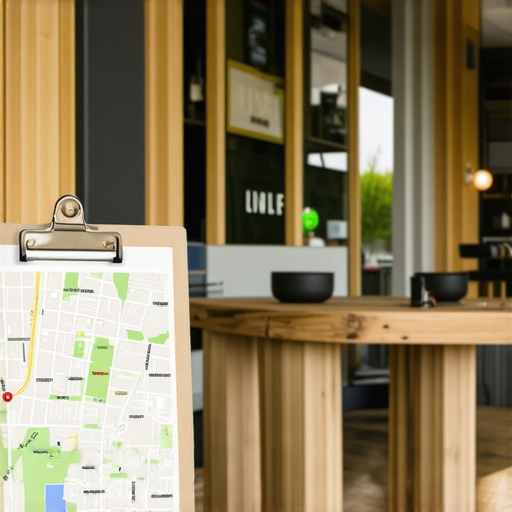
I remember the moment clearly. I was sitting at my desk, staring at my screen, frustrated because despite pouring countless hours into my website, my local Raleigh shop still wasn’t showing up on Google Maps like I hoped. My phone remained silent, and I felt the sting of overlooking something obvious—something that, in hindsight, was the real key to my local visibility. That lightbulb moment made me realize that chasing broad, generic keywords was a mistake. Instead, I needed to understand *where* my customers are—specifically, their zip codes—and how to optimize for those micro-areas.
The Power of Zip Codes in Local Business Rankings
It turns out, your business’s success isn’t just about ranking high for broad keywords like “Raleigh restaurant” or “North Carolina SEO.” It’s about dominating the micro-locations—your customers’ actual neighborhoods. This is because Google Maps and local search algorithms prioritize proximity, especially when users search for nearby services. When I shifted my focus to zip code-based optimization, my visibility skyrocketed. Not only did I attract more local customers, but I also solidified my presence in the very neighborhoods I serve.
Research shows that 78% of mobile local searches result in an offline purchase within 24 hours, emphasizing the importance of being highly visible in your immediate area. But here’s the tricky part: many business owners make the mistake of ignoring zip code signals, thinking that a single website or listing will suffice for the entire city. That’s a mistake worth avoiding. I learned this early on after a failed attempt to rank nationally, only to realize that regional nuances matter greatly—something I delve into over at this detailed guide.
So, are you tired of watching competitors outrank you in your neighborhood? Do you wonder why your Google My Business (GMB) profile isn’t bringing in the local calls it used to? If you’ve faced these issues, you’re not alone. The good news is, understanding and leveraging zip code signals can be a game-changer.
But before jumping into strategies, let me share a common mistake I made early on—believing that one optimized page could cover all locations. That alway led to diluted rankings and missed opportunities. The key is hyper-local focus, which I’ll show you how to implement step-by-step.
Is local SEO hype or actually worth the effort?
Many skeptics dismiss local SEO as just another digital buzzword, but the fact remains that 76% of people searching for a local business visit a store within a day. If you’re not appearing in those local searches, you’re losing potential revenue every single day. For more insights on the importance of precise local signals, check out this article.
Early in my journey, I also underestimated how critical accurate zip code data was—until I ran into inconsistent listings and confusing signals that hurt my rankings. Don’t make that mistake. The good news? With a few strategic moves, you can turn your zip code into your strongest SEO asset.
Ready to learn how to dominate your local area through zip code optimization? Let’s get started with actionable steps that will change the way your business shows up online.
Start by Mapping Out Your Target Neighborhoods
Use tools like Google Maps to identify precise zip codes where your target customers reside. Personally, I printed a Raleigh zip code map, marked the areas where I wanted more foot traffic, and focused my efforts there. This visual approach helped me see gaps in my presence and prioritize zones with high potential. Remember, local rankings are hyper-focused—your goal is to own specific micro-areas, not just the city at large.
Create Location-Specific Landing Pages
Develop dedicated pages for each zip code you serve. Instead of a generic ‘Raleigh SEO services’ page, craft content tailored to each area with keywords like ‘SEO services in 27601’ or ‘Marketing in 27609.’ When I implemented this strategy by adding unique content and local signals, I noticed a steady climb in local queries. These pages act as beacons for Google and your customers, signaling clear service areas.
Optimize Your Google My Business Listings for Each Area
For every zip code, create separate GMB profiles if possible, or at least specify your service areas accurately. When I fixed inconsistent location data and made sure each profile was tied explicitly to its neighborhood, my local visibility increased. To streamline this, consult North Carolina SEO secrets for detailed GMB optimization tips.
Build Local Citations and Backlinks with Zip Code References
Claim and optimize directories like Yelp, Bing, and local business listings, ensuring each mentions your specific zip code. I reached out to neighborhood blogs and local suppliers, asking for backlinks citing my zip codes. This hyper-local backlinking boosted my GMB rankings within targeted neighborhoods. Think of citations as signals from your community—stronger signals mean higher authority in local rankings.
Use Hyper-Local Content and Reviews
Create content that speaks directly to each neighborhood. Questions like, Many entrepreneurs believe that simply optimizing their Google My Business (GMB) listing is enough to outrank local competitors in Raleigh or across North Carolina. However, in my experience, this is a dangerous oversimplification. The often-missed detail lies in the subtle signals that Google uses to determine proximity bias and relevance—nuances that, if misunderstood, can significantly hinder your local SEO efforts. For example, many business owners think that having consistent NAP (Name, Address, Phone number) data across citations is the key, but Google’s algorithms also weigh how your actual business address interacts with your online footprint, especially concerning address formats and virtual office signals. According to expert John Lincoln, these local signals can make or break your rankings, yet most overlook their complexity—more info can be found in this comprehensive guide. Another critical nuance involves understanding the importance of neighborhood context and how Google perceives your physical proximity to searchers’ locations. Many assume that simply being in a densely populated ZIP code guarantees visibility, but the true factor is how well your signals match the local neighborhood or community. For instance, if your business address suggests a different neighborhood than your actual service area, or if your local citations are scattered inconsistently, Google may struggle to associate your listing correctly, leading to lower rankings—more details on the proximity factors are available in this article. Moreover, a common myth persists that reviews alone determine local rank. While reviews play their part, Google heavily relies on localized signals such as embedded map data and proximity zones. Mismanaging these can turn into costly mistakes, causing your shop to get buried. It’s essential to understand that the entire ecosystem of local signals must be appropriately aligned—otherwise, your ranking efforts might go to waste. Don’t fall into the trap of overemphasizing one aspect while neglecting these delicate nuances. Have you ever fallen into this trap? Let me know in the comments. For a deeper dive into how local signals influence your ranking, check out these advanced techniques.
Keeping Your Local SEO Game Strong: Tools I Rely On
Staying ahead in Raleigh’s competitive local business landscape requires diligent maintenance and the right set of tools. I personally swear by using SEMrush for tracking rankings across different zip codes, as it offers granular position tracking that helps me identify where my clients need focus. Additionally, Google Search Console remains indispensable for diagnosing issues with local visibility and ensuring your site isn’t suffering from technical glitches that can sabotage your efforts.
For managing and optimizing Google My Business (GMB) profiles, I recommend BrightLocal. Its review management, citation tracking, and local rank checking features streamline the maintenance process. As I discussed in North Carolina SEO secrets, consistent GMB optimization is vital, and BrightLocal ensures I don’t miss any crucial updates or reviews.
In terms of backlinking and citation building, Moz Local is my go-to. It helps me clean up inconsistent listings and build accurate citations tailored to each zip code—especially important since Google’s algorithms weigh local signals heavily, as highlighted by Google’s own technical documentation.
To manage my content and deploy new location-specific pages efficiently, I leverage Screaming Frog to audit my site regularly. It uncovers broken links or duplicate content that could harm my local SEO efforts over time. Remember, maintaining a healthy site is a continuous process, not just a one-time setup.
How do I keep my local presence thriving over the long haul?
Longevity in local SEO hinges on regular monitoring, updating listings, and adapting to algorithm changes. For example, Google’s updates are frequent, and tuning your approach with ongoing audits can prevent your rankings from slipping. I make it a habit to review my GMB insights and citation profiles weekly, ensuring my signals remain consistent and relevant. This proactive approach is vital, especially considering how sensitive local rankings are to small changes—something I detail in this article.
Moreover, embracing new features like voice search optimization or video content can give you an edge. Google’s algorithm, as discussed in the upcoming updates, increasingly favors multimedia and conversational queries—so stay innovative and ready to adapt.
If you’re serious about long-term success, adopting these tools and habits is essential. Start by integrating SEMrush or BrightLocal into your routine today and keep a keen eye on your local signals—your future self will thank you for the effort. Want to discover even deeper strategies? Check out these advanced techniques and take your Raleigh SEO to the next level.
The Lesson I Wish I Learned About Google Maps Raleigh
One of the toughest lessons I encountered was realizing that broad keyword optimization isn’t enough. I used to focus on generic terms, hoping to rank higher city-wide, only to see my competitors dominate specific neighborhoods. The lightbulb moment came when I discovered how critical zip code signals are—making me understand that local SEO isn’t a one-size-fits-all approach. This insight transformed my strategy and boosted my visibility in the exact micro-areas my customers frequent.
Another revelation was that my Google My Business listings needed to reflect precise neighborhood data. Inconsistent NAP information and overlooked zip code details created confusion for Google, diluting my rankings. Once I aligned my citations and optimized for individual zip codes, my shop started appearing more frequently in nearby searches. It became clear that hyper-local signals are the key to outperforming larger chains that neglect these nuanced details.
Lastly, I learned that content tailored to specific neighborhoods—highlighting local events, landmarks, and community stories—can forge stronger connections with nearby customers. This personal touch doesn’t just improve Google rankings; it builds trust and loyalty within each micro-community. These lessons proved that paying attention to zip code signals and local nuances is vital for any Raleigh business aiming to stand out online.
Comments are closed.