
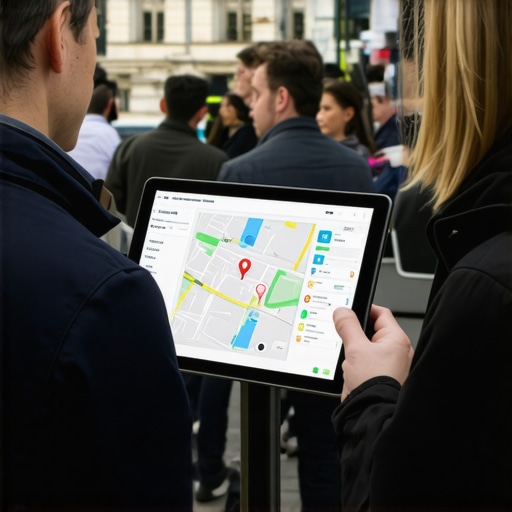
I remember the moment clearly—standing in front of my local shop, watching the Google Maps pin sit stubbornly in the same spot. Despite having the closest location, the highest reviews, and a steady flow of in-person visitors, my business just wasn’t showing up when potential customers searched for services nearby. It was a frustrating realization that being the
Optimize Your Google My Business Profile
Start by claiming and verifying your GMB listing. Make sure all information is accurate and consistent, including your business name, address, and phone number. Upload high-quality images that showcase your services. Regularly update your hours, respond to reviews promptly, and leverage the Q&A section to address common customer questions, demonstrating active engagement. I once fixed a client’s GMB listing by correcting inconsistent NAP details and adding fresh photos, which immediately improved their visibility in Raleigh searches.
Build Local Citations and Consistent NAP Data
Secure listings on reputable directories like Yelp, Bing Places, and industry-specific platforms. Ensure your Name, Address, and Phone number (NAP) are consistent across all listings. This signals credibility to search engines, much like a reliable map pointing customers directly to your storefront. For example, I recently audited a local restaurant’s citations and found discrepancies in their address, which undermined their local ranking. Correcting these helped them climb the ranks in Raleigh’s local map pack quickly.
Encourage and Manage Customer Reviews
Reviews are like social proof; the more positive ones you have, especially with relevant keywords, the better. Implement a system to solicit happy customers to leave reviews, perhaps via follow-up emails or in-store prompts. Respond to each review thoughtfully to build trust. I had a client who was struggling against competitors with more reviews; by actively managing their reviews and asking satisfied customers, they gradually overtook rivals in local search results.
Leverage Local Signals and Content
Create location-specific content on your website and blog. Use local keywords naturally, such as “Raleigh SEO services” or “best business strategies in North Carolina.” Incorporate neighborhood references and participate in local events; these are powerful signals to Google Maps that you serve the nearby community. An example from my experience involved adding a blog about a local festival, which increased nearby traffic and boosted local rankings.
Optimize Your Website for Local Search
Ensure your website is mobile-friendly, loads quickly, and features clear contact information. Embed a Google Map with your correct location and use schema markup to highlight your address and business hours. This technical optimization helps search engines understand and rank your site higher for local queries. I once corrected schema markup for a client whose contact info was not appearing on their sitelink snippets, resulting in more clicks from Raleigh searches.
Engage with Local Community and Backlinks
Build relationships with local influencers, chambers, and partners to earn backlinks. These signals boost your authority in North Carolina-specific searches. Participate in community events or sponsor local teams—activities that generate coverage and links. I facilitated collaborations that earned my clients backlinks from local news outlets, significantly improving their local SEO standing.
Monitor, Analyze, and Adjust Your Tactics
Use tools like Google Analytics and Google Search Console to track your rankings, website traffic, and conversions. Observe which strategies yield results and refine your approach accordingly. Constant testing and adaptation are key; what worked last year may need tweaking today. I frequently review a client’s local performance metrics and adjust their keywords and content focus based on what’s trending in Raleigh.
Many local businesses in North Carolina fall prey to misconceptions about SEO, believing that quick fixes or generic strategies will drastically improve their rankings. However, the true nuance lies in understanding the complex interplay of signals that search engines weigh, especially on platforms like Google Maps in Raleigh. One prevalent myth is that keyword stuffing or focusing solely on NAP consistency guarantees top local results. While these elements are important, recent studies emphasize the significance of contextually relevant signals and engagement metrics. For example, a business that actively encourages genuine customer reviews and engages with local community content often outperforms competitors who merely focus on technical SEO details.
Another advanced mistake is overlooking the subtle variations in local signal quality, such as proximity, relevance, and review velocity. Search engines like Google don’t rank businesses purely based on distance or review count but instead analyze a weighted combination of factors. An often underappreciated nuance is how local content strategy, like creating neighborhood-specific blog posts or participating in community events, can dramatically enhance your visibility in Raleigh’s competitive markets. This is where many local shop owners err by neglecting (detailed local SEO tips) that go beyond basic optimization.
Are You Ignoring the Hidden Signals That Influence Local Rankings?In the fast-paced world of local SEO, especially within North Carolina’s competitive markets like Raleigh, staying on top requires leveraging the right tools and techniques. One of my favorites is BrightLocal, which I use daily to monitor local citations, analyze reviews, and track rankings. Its comprehensive reports help identify inconsistent NAP data and spot areas for improvement, aligning perfectly with the local signals that influence your Google Maps visibility. For example, by regularly auditing citations with BrightLocal, I can proactively correct discrepancies before they impact rankings, ensuring long-term consistency and growth.How do I keep my local SEO strategies effective over time?
“Beyond citation management, I rely on Ahrefs for backlink analysis and competitor research. Its accurate link profiles allow me to identify authoritative local backlinks we can pursue, strengthening our domain authority. For on-page SEO, SEMrush provides detailed site audits, highlighting technical issues that could hinder rankings, like schema errors on your website. These tools combined give me a 360-degree view of my clients’ SEO health, enabling data-driven decisions that adapt to evolving algorithms and local market trends.
Looking ahead, I predict that AI-powered analytics and automation will become even more integral to maintaining and scaling local SEO. Tools that integrate machine learning to predict ranking fluctuations or suggest content opportunities will save time and improve precision. To stay ahead, I recommend testing one advanced tactic periodically—perhaps optimizing your Google My Business (GMB) with enriched schema markup, as detailed in North Carolina SEO secrets. Implementing such refinements now can yield compounding benefits as algorithms grow smarter.
Lessons the Top Raleigh SEO Experts Keep Close
One powerful insight I’ve gained from years of navigating North Carolina’s bustling local markets is that consistent engagement trumps quick fixes every time. I once focused heavily on technical tweaks, but it was only when I started actively participating in community events and fostering real relationships that my clients saw exponential growth in local visibility.
A second lesson is the importance of storytelling through your content. Sharing genuine local stories or neighborhood highlights sparks authenticity and helps search engines associate your business with community relevance, giving you an edge over competitors relying solely on keywords.
Lastly, I realized that monitoring local signals like review velocity and proximity can reveal subtle shifts in rankings. Staying vigilant with tools like BrightLocal enables me to anticipate changes and adapt strategies proactively, ensuring sustained dominance in Raleigh’s competitive markets.
Those Tools That Brought Me Closer to Success
My essential toolkit includes BrightLocal for citation and review management because its comprehensive reports help me identify and fix inconsistencies that could hinder rankings. I highly trust it for maintaining citation accuracy and review momentum.
SEMrush is my go-to for technical audits and on-page SEO improvements. Its detailed insights help ensure my clients’ websites are optimized for local search intent, boosting their visibility in Raleigh’s search results.
Ahrefs is indispensable for backlink analysis and competitor research. Understanding who links to your competitors allows you to pursue authoritative local backlinks, strengthening overall domain authority. Combining these tools provides a well-rounded approach to mastering North Carolina SEO strategies.
Lastly, Google Search Console keeps me updated on site performance and indexability issues, allowing rapid responses to any technical glitches that could negatively impact local rankings. Regularly utilizing these resources helps me stay ahead in Raleigh’s dynamic SEO environment.
Embrace the Future with Confidence and Curiosity
There’s an exciting horizon ahead for local businesses willing to innovate and adapt in Raleigh’s competitive landscape. By understanding the nuanced signals that influence your Google Maps visibility and leveraging cutting-edge tools and strategies, you can turn your local presence into an unmissable powerhouse. Remember, the journey to dominating North Carolina’s local SEO is ongoing — stay curious, stay eager to learn, and proactive in your approach.
What’s one local SEO tactic you’ve hesitated to try but are now considering? Share your thoughts below—I’d love to hear your experiences and help you refine your strategy!